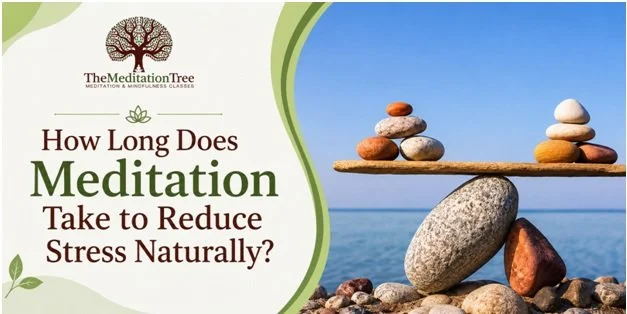
How Long Does Meditation Take to Reduce Stress Naturally?
Summary
Meditation reduces stress through consistent practice, self-awareness, and mindfulness. The timeline varies for everyone depending the amount of time you devote to your practice. Some will notice some subtle changes with 2 to 6weeks…some longer! Regular daily meditation helps build emotional resilience, healthier responses to challenges, and long-term mental well-being.
——————————————————————————————————-
If you have recently started meditating, one question might come to your mind: how much time does meditation take to reduce stress naturally? Actually, the answer is not the same for everyone. Some people can reduce stress after a few sessions, while others experience gradual changes.
The reason is simple. It is not about a quick fix; instead, meditation is a practice that helps you understand your thoughts, emotions, and reactions as well as learning to exist “in the present moment”. Over time, this awareness changes how you respond to life's challenges. In this guide, we will learn the factors that influence meditation to reduce stress quickly.
Factors that Impact How Quickly Meditation Can Reduce Stress!
Consistency Matters!
Many beginners believe that they need to meditate for a few hours to see results. But actually, consistency is more important than duration. Even if you practice mindfulness for 10 to 20 minutes each day, you can become more aware of your learned and often detrimental mental and behavioural patterns. When you continue it, you can start to notice stressful and anxious thoughts without reacting.
Your Approach to Mindfulness
Stress does not suddenly disappear when you sit quietly. You can reduce stress when mindfulness becomes part of your everyday life. Online mindfulness sessions encourage you to observe your thoughts, emotions, and sensations with curiosity without always reacting to them. If you can develop this skill, you can handle stressful situations easily. You learn to respond thoughtfully. Remember, Stress is never caused by situations or people. Stress comes in direct response about your thoughts. (The narrative you create in your mind.)
Stress Levels Influence the Timeline
Everyone begins meditation from a different place. For example, work-related stress can be reduced sooner than a person experiencing long-term stress or emotional exhaustion. It does not mean meditation is less effective for chronic stress. It means your mind may need more time to develop healthier thought and behavioral patterns. Through regular practice and patience, you can ensure lasting progress.
Developing Self-Awareness Takes Time
One of the greatest benefits of mindfulness meditation is increased self-awareness. You can recognize the thoughts, habits, and emotional triggers that create unnecessary stress. At first, this awareness may feel surprising. Over time, you can choose your responses instead of being controlled by your automatic reactions/thoughts. This gradual shift can reduce stress naturally.
Meditation Becomes a Lifestyle
People often expect that meditation can provide instant calm. Yes! You can achieve relaxation, but its greatest change comes from how you react in your daily living. Mindfulness will become a part of your conversations, decisions, work, and relationships. You naturally develop greater patience, emotional balance, and resilience. Stressful situations will still arise, but YOU, rather than your thoughts and emotions, will control how you respond!
Final Thoughts!
Remember, there is no fixed timeline. However; with patience, regular practice, and understanding your own mind, you can better support your Emotional. Physical and spiritual well-being.
Hopefully, you will find this blog most helpful. For any queries, contact us today.